
Plaza Dental Group: 14111 Douglas Pkwy Suite 103 Urbandale IA 50323
Dentist in Urbandale

Choosing a Dentist in Urbandale or Des Moines: What Should You Look For?

Choosing a Dentist in Urbandale or Des Moines: What Should You Look For?

Choosing a dentist is an important decision. Whether you have recently moved to the area, are looking for a new dental home, or simply want to find a practice that better suits your needs, it can help to know what to look for.

If you are searching for a dentist in Urbandale, IA, or a dentist in Des Moines, IA, you will find a number of practices to choose from. While location and convenience are important, there are several other factors worth considering before you make an appointment.

At Plaza Dental Group, we believe patients should feel comfortable asking questions and understanding their options. Here are some of the things we recommend considering when choosing a dental practice for yourself or your family.

1. Get to Know the Dental Team

One of the first things to consider is who will be looking after your dental health.

Take some time to learn about the dentists at a practice, including their education, professional experience, areas of interest, and approach to patient care. It can help you feel more comfortable knowing a little about the people who will be providing your care.

At Plaza Dental Group, you can learn more about our dentists and dental professionals through our Meet the Dentists page. 

We believe that building a good relationship with your dental team is an important part of long-term oral health.

2. Look at the Services Available

Your dental needs can change over time. You may need nothing more than regular examinations and cleanings today, but in the future you could require restorative, cosmetic, orthodontic, periodontal, or other dental treatment.

For that reason, it can be helpful to choose a practice that offers a range of services.

Our general dentistry services are designed to support your ongoing oral health, from routine preventive care to treatment for existing dental concerns. We also offer a range of additional services, including cosmetic dentistry, dental implants, oral surgery, orthodontics, periodontal care, pediatric dentistry, and more.

Having access to different types of care within one dental practice can make treatment more convenient and help provide continuity as your needs change.

3. Find Out What to Expect at Your First Appointment

Starting with a new dentist can sometimes feel uncertain, especially if you do not know what your first appointment will involve.

Before booking, it is perfectly reasonable to ask what will happen during your initial visit. You may want to know whether the appointment includes a comprehensive examination, dental imaging, a discussion of your dental history, or a conversation about any concerns you have.

You should also feel comfortable asking how findings will be explained and whether your dentist will discuss treatment options with you.

Our new patient information provides details to help you prepare for your first visit. We want new patients to know what to expect and have the information they need before they arrive.

4. Choose a Dentist Who Communicates Clearly

Good communication is an important part of dental care.

You should be able to ask questions, discuss concerns, and understand why a particular treatment may be recommended. If you are given several options, your dentist should be willing to explain the differences so you can make an informed decision.

Our patients often mention communication and the way our team interacts with them in their reviews. For example, patients have described our team as friendly and helpful, while others have highlighted the time our dentists take to listen and explain treatment.

Of course, every patient’s experience is different, but these comments can give you an idea of what other people value about their visits.

You can read more experiences from our patients on our patient reviews page.

5. Ask How Dental Technology Is Used

Modern dental technology can play an important role in diagnosis and treatment.

When comparing dental practices, however, it is worth looking beyond a simple list of technology. Instead, ask how the technology is actually used to benefit your care.

Digital imaging, for example, can help your dentist identify and assess dental problems and plan appropriate treatment. Other technology may assist with restorative procedures, examinations, or treatment planning.

The important question is not simply whether a practice has modern technology, but whether that technology is being used in a way that helps provide appropriate, efficient, and understandable care.

6. Read Patient Reviews — But Look Beyond the Star Rating

Online reviews can be useful when you are researching a new dentist.

Rather than looking only at the overall rating, read what patients actually say. Do they mention friendly staff? Clear explanations? Thorough examinations? Comfortable appointments? Good communication?

Specific comments can tell you much more about a patient’s experience than a star rating alone.

At Plaza Dental Group, we are grateful for the feedback our patients choose to share. Reviews can help prospective patients get a sense of what others have experienced, while your own visit will ultimately help you decide whether a practice is right for you.

7. Consider Location and Appointment Convenience

Even the right dental practice needs to be practical for your everyday life.

If a dental office is convenient to get to, it may be easier to keep up with regular examinations, cleanings, and recommended follow-up appointments.

When choosing between dental practices, consider how easy the location is for you to reach from home, work, or school. You can also ask about current appointment availability and office hours when you contact us.

8. Ask Questions About Treatment Costs

Dental costs can vary significantly depending on the treatment you need, your insurance coverage, and your individual circumstances.

Before starting treatment, make sure you understand what is being recommended and why. You can also ask about the expected cost, whether more than one appointment will be necessary, and how your dental insurance benefits may apply.

We encourage our patients to ask questions about their treatment and costs. Understanding your options can make it easier to make decisions about your dental care.

If you have questions about a proposed treatment or would like to discuss becoming a patient, our team is happy to help.

9. Think About Your Long-Term Dental Care

Choosing a dentist is not necessarily about finding somewhere to go when you have a toothache. Ideally, your dental practice becomes part of your long-term approach to maintaining your oral health.

Regular examinations and preventive care can help identify potential problems before they become more complicated. Having a dental team that knows your history can also make it easier to monitor changes in your oral health over time.

What Should You Ask Before Choosing a Dentist?

If you are comparing several dental practices, consider asking:

  • What are the dentists’ qualifications and areas of experience?
  • What dental services does the practice provide?
  • What happens during a first appointment?
  • How are treatment recommendations explained?
  • What technology is used during examinations and treatment?
  • What do patients say about their experiences?
  • Where is the office located?
  • What are the current appointment options?
  • How are treatment costs and insurance handled?

There is no single answer to what makes a dentist the right choice. The best practice for you will depend on your dental needs, preferences, budget, and what makes you feel comfortable.

Frequently Asked Questions

What should I look for when choosing a dentist in Urbandale or Des Moines?

Look at the dental team’s professional background, the services available, communication style, first appointment process, patient reviews, technology, location, appointment availability, and approach to treatment costs.

Is Plaza Dental Group a general dentistry practice?

Yes. We provide general dentistry as well as a range of additional dental services, including cosmetic dentistry, dental implants, oral surgery, orthodontics, periodontal care, pediatric dentistry, and other treatments.

How should I use online dental reviews when choosing a dentist?

Look beyond the overall rating and read individual comments. Pay attention to what patients say about communication, examinations, staff, treatment explanations, and their overall experience. Reviews are useful when researching a practice, but your own consultation is also an important part of deciding whether a dentist is right for you.

What should I ask at my first dental appointment?

Ask about the results of your examination, whether any additional imaging is recommended, what treatment options are available, why a particular treatment has been recommended, and what the next steps will be. You can also ask about expected costs and insurance coverage.

Looking for a Dentist in Urbandale or Des Moines?

Finding the right dentist does not have to be difficult. Start by considering the things that matter most to you: the experience of the dental team, the services available, communication, convenience, patient feedback, and how comfortable you feel asking questions.

At Plaza Dental Group, our goal is to provide comprehensive dental care while making sure our patients understand their options and feel comfortable throughout their care.

If you are looking for a dentist in Urbandale, IA, or a dentist in Des Moines, IA, we would be happy to answer your questions and help you get started.

Contact our practice to learn more or ask about becoming a patient.

Continue reading

Dental Implants in Urbandale Information Guide

Dental Implants in Urbandale: What to Expect From Treatment, Healing and Long Term Care

Dental Implants in Urbandale: What to Expect From Treatment, Healing and Long Term Care

A dental implant replaces a missing tooth root with a small titanium implant that integrates with the jawbone. Once healed, it can support a crown, bridge or implant supported denture, providing a stable way to replace missing teeth.

If you are considering dental implants in Urbandale, understanding what happens before, during and after treatment can make the process feel much more straightforward.

At Plaza Dental Group, implant treatment is planned around each patient’s individual needs, from the initial assessment through to the final restoration and ongoing care.

What Are Dental Implants?

Dental implants are designed to replace the root of a missing tooth. A small titanium implant is placed into the jawbone, where it gradually integrates with the surrounding bone.

Once healing is complete, the implant can support a replacement tooth such as a dental crown. Depending on how many teeth are missing, implants can also be used to support a bridge or implant supported denture.

One of the main advantages of an implant is that it does not rely on the neighboring teeth for support in the same way a traditional bridge does.

For patients considering dental implants in Urbandale, the first step is an assessment to determine whether implants are appropriate for their individual situation.

The Dental Implant Process

Dental implant treatment takes place in stages rather than during a single appointment.

1. Consultation and Assessment

The process begins with a detailed examination of your teeth, gums and jawbone. Your dentist will also review your medical and dental history and discuss what you want to achieve.

Imaging may be used to assess the available bone and help plan the position of the implant.

This stage is important because dental implants need a suitable foundation in the jawbone to provide long term stability.

2. Implant Placement

Once your treatment has been planned, the implant is placed into the jawbone.

The procedure is carried out using local anesthesia, with sedation options available where appropriate, particularly for patients who feel anxious about dental treatment.

Your dentist will explain what to expect before the procedure and provide aftercare instructions for the recovery period.

3. Healing and Integration

Following placement, the implant needs time to integrate with the surrounding bone.

This process, known as osseointegration, takes place gradually over several months. During this stage, the implant becomes firmly supported by the jawbone.

The exact healing time varies from patient to patient and depends on factors including your overall oral health, the location of the implant and whether additional treatment was required.

4. Your Replacement Tooth

Once the implant has healed sufficiently, it can be restored with a custom replacement tooth.

For a single missing tooth, this will often be a dental crown. Multiple implants can also be used to support a bridge or implant supported denture where several or all teeth are missing.

Your dentist will explain which option is appropriate based on your individual needs.

Who Can Have Dental Implants?

Many adults with missing teeth may be suitable candidates for dental implants.

Healthy gums and sufficient bone are important factors when considering treatment. If there is not enough bone available to support an implant, additional treatment such as bone grafting may sometimes be recommended.

Other factors can also affect your suitability, including your general health, oral hygiene and smoking habits.

This is why an individual consultation is important. Rather than assuming that implants are or are not suitable, your dentist can assess your specific circumstances and explain the available options.

What Is Dental Implant Recovery Like?

It is normal to experience some swelling, tenderness or bruising following implant surgery.

These symptoms generally improve as the initial healing progresses. Your dentist will provide specific instructions about looking after the implant site, eating, cleaning your teeth and managing any discomfort.

During the early healing period, it is important to follow your aftercare instructions carefully.

The initial recovery is only part of the overall process. The implant also needs time to integrate with the jawbone before the final restoration is placed.

How Long Do Dental Implants Last?

Dental implants are designed as a long term tooth replacement option.

How long an implant lasts depends on several factors, including oral hygiene, gum health, general health, biting forces and regular professional care.

Looking after your implants is similar in many ways to looking after natural teeth. Regular brushing, cleaning between your teeth and attending dental checkups all help maintain the health of the gums and bone surrounding the implant.

If you notice discomfort, movement or changes around an implant, contact Plaza Dental Group promptly rather than waiting for the problem to become more serious.

Dental Implants Compared With Bridges and Dentures

There are several ways to replace missing teeth, and implants are not automatically the right choice for everyone.

A traditional bridge replaces a missing tooth by attaching to neighboring teeth, while dentures are removable and sit over the gums.

Dental implants are different because they replace the root of the missing tooth and are supported by the jawbone.

For suitable patients, this can provide a stable and natural feeling replacement. However, the best option depends on your oral health, the number of teeth missing, your preferences and your treatment goals.

A consultation allows you to compare the options before making a decision.

Replacing One Tooth or Several Teeth

Dental implants can be used in a variety of situations.

A single missing tooth may be replaced with one implant and a crown.

If several teeth are missing, multiple implants may be used to support a fixed bridge.

For patients who have lost most or all of their teeth, implant supported dentures can provide additional stability compared with traditional removable dentures.

The number of implants required and the type of restoration used will depend on your individual circumstances.

Dental Implants for Patients in Urbandale and the Des Moines Area

Plaza Dental Group provides dental care for patients in Urbandale and the surrounding Des Moines area.

For patients researching dental implants in Urbandale, choosing a dental office where your treatment can be planned around your individual oral health is an important first step.

The team can assess your current situation, explain the different tooth replacement options and help you understand what the implant process would involve before you decide whether to proceed.

Why Choose Plaza Dental Group for Dental Implants?

Plaza Dental Group’s team includes Dr. Steffany Mohan, Dr. Debbie Dietrich and Dr. Colin Odland.

The dental office takes a personalized approach to treatment, with the aim of making patients feel informed and comfortable throughout the process.

One Plaza Dental Group patient described their first implant appointment as a positive experience, highlighting the team’s professionalism, empathy and caring approach.

“I was thoroughly impressed with their positivity and professionalism. They were very empathetic and caring.”

Plaza Dental Group patient review

For anyone who feels nervous about starting dental implant treatment, having a team that takes time to explain the process can make a significant difference.

Looking After Your Dental Implants

Once your implant treatment is complete, maintaining good oral hygiene remains important.

To help protect your investment:

  • Brush your teeth twice a day.
  • Clean carefully around your implant and replacement tooth.
  • Attend regular dental examinations and professional cleanings.
  • Follow any specific instructions provided by your dental team.
  • Tell your dentist about any changes, discomfort or movement around the implant.

Dental implants can provide a long term solution, but they still need regular care.

If you are considering dental implants in Urbandale, the best place to start is with a professional assessment. Plaza Dental Group can discuss your individual circumstances, explain your options and help you understand what treatment may involve.

Call Plaza Dental Group to schedule a consultation and discuss whether dental implants could be right for you.

Frequently Asked Questions

How much do dental implants cost in Urbandale?

The cost of dental implants varies depending on the number of teeth being replaced and whether additional treatment is required. Plaza Dental Group can provide a personalized treatment plan and discuss the associated costs during your consultation.

How long does the dental implant process take?

Dental implant treatment usually takes several months because the implant needs time to integrate with the jawbone before the final restoration can be placed. The exact timeline varies depending on your individual treatment plan.

Are dental implants painful?

The implant placement procedure is performed using anesthesia, so you should not feel pain during the procedure. Some tenderness, swelling or bruising can occur during the initial recovery period, and your dentist will provide aftercare instructions.

Am I a good candidate for dental implants?

Many adults with missing teeth may be suitable for dental implants. Your dentist will assess your gums, jawbone, general health and individual circumstances before recommending treatment.

How long do dental implants last?

Dental implants are designed to be a long term tooth replacement solution. Their longevity depends on factors including oral hygiene, gum health, general health and regular professional care.

What is the difference between an implant, bridge and denture?

A dental implant replaces the root of a missing tooth and is supported by the jawbone. A bridge is supported by neighboring teeth, while a denture sits over the gums and can be removed. Your dentist can explain which option is most appropriate for your individual needs.

Continue reading

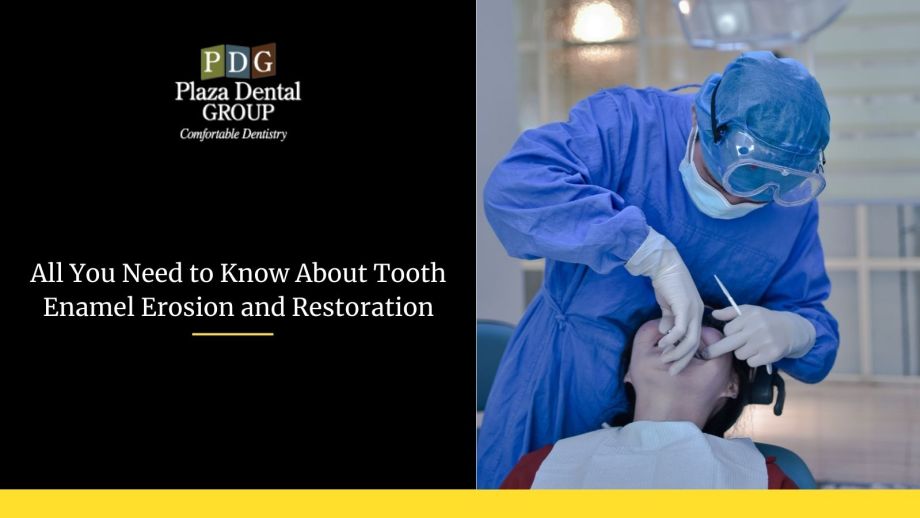
All You Need to Know About Tooth Enamel Erosion and Restoration

All You Need to Know About Tooth Enamel Erosion and Restoration

Tooth Enamel Erosion: Causes, Treatment and How to Protect What You Have


Tooth enamel is the hard outer layer that shields your teeth from everything you bite, chew, sip, and grind, and once it wears away, it does not grow back. Enamel erosion happens gradually, driven mostly by acids from food, drinks, and the stomach, along with grinding and heavy handed brushing.

The early signs are easy to miss: new sensitivity to hot, cold, or sweet things, edges that look thin or slightly see through, and teeth that seem more yellow than they used to. The encouraging news is that erosion can be stopped at any stage, and modern treatments can restore teeth that have already lost enamel. Here is what causes enamel loss, how to recognize it early, and how it is treated.

What enamel does, and why losing it matters

Enamel is the hardest substance in the human body, harder even than bone, and it needs to be. Every day it absorbs the force of chewing, shrugs off temperature swings from hot coffee to iced drinks, and stands between your teeth and the acids in everything you consume.

But enamel has one critical weakness: it contains no living cells. Skin heals, bone mends, enamel does not. Whatever enamel you lose is gone for good, and the layer underneath, called dentin, is softer, more sensitive, and more yellow. That is why protecting enamel early is so much easier than dealing with the consequences of losing it.

What causes tooth enamel erosion?

Enamel loss rarely has a single cause. For most people it is a slow accumulation of everyday habits and factors, including:

  • Acidic foods and drinks. Sodas, citrus, fruit juices, sports drinks, and wine all soften enamel on contact, and frequent sipping keeps teeth bathed in acid.
  • Grinding and clenching. Many people grind their teeth at night without knowing it, steadily wearing the biting surfaces flat.
  • Brushing too hard. Scrubbing aggressively, especially with a firm brush, physically wears enamel away, particularly near the gum line.
  • Stomach acid. Acid reflux and conditions involving frequent vomiting bring powerful stomach acid into contact with teeth.
  • Dry mouth. Saliva is your built in defense, rinsing away acids and delivering minerals back to enamel. Less saliva means less protection.
  • Plaque buildup. The bacteria in plaque turn sugars and starches into acids that quietly attack enamel around the clock.

The signs of enamel loss to catch early

Enamel erosion announces itself in small ways before it becomes a big problem. Keep an eye out for:

  • Sensitivity. A twinge when you drink something hot, cold, or sweet is often the very first sign that enamel has thinned.
  • Discoloration. As enamel wears, the yellower dentin beneath begins showing through, making teeth look dull or yellow no matter how well you brush.
  • Rough or thinning edges. The biting edges of front teeth may look slightly transparent, chipped, or uneven.
  • Cupping. Small indentations can appear on the chewing surfaces of back teeth.
  • More frequent chips and cracks. Weakened enamel gives way more easily under everyday pressure.

If any of these sound familiar, do not wait for them to worsen. Erosion caught early can be stopped in its tracks.

How to protect the enamel you have

Prevention is where you hold most of the power, and the habits are refreshingly simple. Brush twice a day with a fluoride toothpaste and a soft brush, using gentle pressure. Floss daily to keep plaque from settling in.

Enjoy acidic drinks with a straw and alongside meals rather than sipped across the whole afternoon, and rinse with water afterward rather than brushing immediately, since enamel is temporarily softened by acid. Chewing sugar free gum encourages saliva, your natural defense, and drinking plenty of water helps too, especially if your mouth tends to feel dry.

And if you wake with a tight jaw or your partner hears grinding at night, tell your dentist. A custom night guard is a small, comfortable device that can save your enamel from years of silent wear while you sleep.

Tooth enamel loss treatment: how worn teeth are restored

When enamel has already been lost, treatment depends on how far the erosion has progressed, and there are excellent options at every stage.

For early erosion

Mild enamel loss is usually managed with protection and reinforcement. Professional fluoride treatments help strengthen the enamel that remains, desensitizing treatments calm sensitive teeth, and your dentist will help you pinpoint and change whatever was driving the erosion so it stops progressing.

For moderate wear

Dental bonding rebuilds worn or chipped areas with tooth colored material, restoring the shape and protecting the surface in a single comfortable visit. It is an effective and conservative way to repair the damage erosion has already done.

For significant enamel loss

Where erosion has substantially worn or weakened teeth, veneers or crowns restore both strength and appearance. Veneers cover the visible front surfaces of teeth, while crowns wrap the whole tooth in protection. Both are custom made to look completely natural, and both give badly worn teeth a genuinely fresh start.

Everyday drinks: the surprising enamel league table

Most people are surprised to learn that some healthy seeming choices are hard on enamel. Fruit juices and smoothies are acidic despite their virtuous reputation, sports drinks combine acid with sugar, and sparkling water, while far gentler than soda, is still mildly acidic. Plain water and milk are the true friends of enamel, and coffee and tea sit comfortably in the middle as long as sugar stays out of them.

None of this means giving up everything you enjoy. It means being smart about how you enjoy it: with meals rather than sipped all afternoon, through a straw where practical, and followed by a rinse of water. Enamel handles occasional acid encounters well. It is the constant, all day exposure that does the damage.

A word about children’s enamel

Enamel on baby teeth and newly arrived adult teeth is thinner than fully matured adult enamel, which makes children’s teeth especially vulnerable to acidic drinks and constant snacking. The habits your children build now, gentle brushing with fluoride toothpaste, water as the default drink, and regular dental visits, are gifts their smiles will still be enjoying decades from today. Family checkups are the easiest way to keep every set of teeth in the house on track.

Enamel care for Des Moines families

An enamel check takes moments during a routine visit, is completely painless, and tells you exactly where you stand while your options are still simple. If it has been a while since your family’s last checkup, this is a perfect reason to come back in.

Plaza Dental Group cares for patients across West Des Moines, Urbandale, and the greater Des Moines area, and enamel concerns are something we see and treat every single day. Whether you have noticed new sensitivity, are worried about grinding, or simply want an expert eye on your enamel at your next checkup, our team will give you an honest assessment and a clear plan, from simple prevention through to complete restoration.

Frequently asked questions

Can tooth enamel grow back?

No. Enamel contains no living cells, so once it is lost, your body cannot rebuild it. What you can do is strengthen the enamel that remains through fluoride and good daily habits, and restore already damaged teeth with treatments such as bonding, veneers, or crowns. That distinction is exactly why early attention matters: protecting existing enamel is simple, while replacing its function takes dental treatment.

What does enamel erosion feel like?

The most common early experience is sensitivity: a short, sharp response to hot drinks, cold foods, or sweets that was not there before. Some people notice their teeth looking more yellow, or the edges of front teeth appearing thin and slightly transparent. In later stages, sensitivity can become more intense and teeth may chip more easily. If any of this feels familiar, an examination can tell you exactly where your enamel stands.

Is enamel erosion the same as tooth decay?

This is one of the questions we hear most often at checkups, and the confusion is understandable since both involve damage to teeth.

They are related but different. Erosion is the gradual wearing away of enamel across the surface of teeth, caused by acids and physical wear. Decay is localized damage where plaque bacteria create cavities in specific spots. The two often travel together, because eroded enamel gives decay an easier way in, and the same good habits, along with regular dental visits, protect you from both.

One last encouragement: enamel erosion is never a reason for embarrassment. It happens to devoted brushers and juice loving grandparents alike, and our team has seen every stage of it. The only mistake you can really make is waiting.

Give your enamel the attention it deserves

You only get one supply of enamel, and protecting it is far easier than replacing it. If you have noticed sensitivity, discoloration, or wear, or you simply want peace of mind, schedule a visit with Plaza Dental Group in West Des Moines. Visit our contact page to book your appointment today.

Plaza Dental Group

Plaza Dental Group is a leading group of dentists in Des Moines, IA that provides high-quality dentistry in a comfortable and stress-free environment. We have a team of caring and highly-skilled professionals that uses state-of-the-art technology and delivers excellent service to the patients. Request an appointment today!

Continue reading

Dental Implants in Urbandale Iowa

Dental Implants in Urbandale, Iowa: Everything You Need to Know Before Your First Appointment

Dental Implants in Urbandale, Iowa: Everything You Need to Know Before Your First Appointment

If you are missing a tooth or have been told one needs to come out, dental implants are likely the first solution your dentist will mention. They are the closest thing modern dentistry has to a natural tooth replacement, and for most patients who are suitable candidates, they are the long-term option that makes the most practical and financial sense.

But implants involve more steps than a filling or a crown, and the process takes longer. Understanding what is actually involved before your first appointment means you arrive informed, ready to ask the right questions, and far better positioned to make a confident decision.

Plaza Dental Group in Urbandale, Iowa provides dental implant treatment for patients from across the greater Des Moines area, including Waukee, Clive, Johnston, and West Des Moines.

What Is a Dental Implant?

A dental implant is a small titanium post that is surgically placed into the jawbone where a tooth root once was. Over a period of several months, the bone grows around and bonds to the implant in a process called osseointegration. Once that bond is secure, a connector piece called an abutment is attached, and a custom-made crown is placed on top.

The result is a replacement tooth that is anchored directly into the jaw. It does not move, does not rely on neighboring teeth for support, and does not require any special cleaning routine beyond normal brushing and flossing.

Why Implants Are Considered the Gold Standard

Dentures and bridges are both established tooth replacement options, and for many patients they are appropriate. But neither addresses what happens to the jawbone after a tooth root is lost.

Bone needs stimulation to maintain its density. A natural tooth root provides that stimulation every time you bite and chew. When the root is gone, the bone in that area gradually resorbs. Dentures and bridges sit above the gum line and do nothing to prevent this. Over time, bone loss changes the shape of the jaw, affects facial appearance, and can make future treatment more complex.

A dental implant is the only replacement option that replicates the function of a tooth root. It transmits biting forces into the bone, maintaining the density and volume that would otherwise be lost. This is why implants tend to be the recommendation for patients who are good candidates: the outcome is not just cosmetically superior but physiologically better for long-term oral health.

Who Is a Good Candidate for Dental Implants in Urbandale Iowa?

Most healthy adults who are missing one or more teeth are candidates for implants. The key requirements are sufficient bone volume to anchor the implant securely, healthy gums, and good general health that supports surgical healing.

Certain conditions require additional assessment. Patients with a history of gum disease need to have that fully treated before implant placement, as uncontrolled gum disease around an implant leads to failure. Heavy smokers have a higher implant failure rate, and your dentist will discuss this with you honestly. Patients with conditions such as uncontrolled diabetes that affect healing will need to be assessed individually.

If there has been significant bone loss at the site of the missing tooth, bone grafting may be needed before the implant can be placed. This adds time to the process but does not change the final outcome.

The only reliable way to determine whether you are a candidate is a thorough clinical assessment including imaging. This is what your consultation at Plaza Dental Group is for.

The Dental Implant Process Step by Step

Understanding the full process helps set realistic expectations and reduces the anxiety that can come from not knowing what comes next.

Consultation and Planning

Your first appointment is an assessment, not a commitment to treatment. Your dentist will examine your teeth and gums, take digital X-rays and 3D imaging to evaluate your bone volume and the anatomy of the implant site, and review your medical history. From this, a detailed treatment plan is built that outlines every step, the timeline, and the full cost before anything begins.

Any Necessary Preparatory Work

If the tooth is still present, it will be extracted. If bone grafting is needed, that takes place at this stage and is given time to heal before implant placement. Not every patient needs preparatory work, but when it is needed it is an important foundation for a successful outcome.

Implant Placement

The titanium post is placed into the jawbone under local anesthetic, with sedation available for patients who prefer it. The procedure typically takes one to two hours and is more comfortable than most patients expect. Some pressure during placement is normal but pain is not. Mild soreness and swelling for a few days after is typical and manageable with over-the-counter medication.

Healing and Osseointegration

The implant is left to integrate with the bone over a period of three to six months, depending on the individual and the site. There are occasional check-up appointments during this phase but no active treatment. A temporary restoration is usually placed so the gap is not visible during healing.

Crown Placement

Once integration is confirmed, the abutment is attached and impressions or digital scans are taken to fabricate your custom crown. The crown is matched to the shade and shape of your surrounding teeth. When it is placed, the implant process is complete.

How Long Do Dental Implants Last?

With proper care, dental implants are designed to last a lifetime. The titanium post, once integrated, is a permanent fixture. The crown on top may need replacing after 15 to 20 years depending on wear and care, but the implant itself rarely needs intervention if oral hygiene is maintained and regular dental appointments are kept.

This longevity is one of the reasons implants make strong financial sense over time. A bridge needs replacement, carries risks for the adjacent teeth it is anchored to, and does nothing for bone preservation. An implant, placed once and maintained well, is a more permanent and healthful solution.

What Do Dental Implants Cost in Urbandale, Iowa?

The cost of a dental implant in Urbandale and the greater Des Moines area depends on several factors: whether preparatory work like bone grafting or extraction is needed, the type of implant and crown used, and how many teeth are being replaced.

A single-tooth implant is a meaningful investment, and the full cost is not always covered by dental insurance. However, many plans that include major restorative benefits will cover a portion of the crown, and some will contribute toward other stages of treatment. Plaza Dental Group’s front desk team will verify your coverage before treatment begins and walk you through exactly what to expect in terms of costs.

Financing options are available to help spread the cost for patients who need them. The practice also offers a membership plan for uninsured patients that reduces the cost of treatment across the board.

Dental Implants at Plaza Dental Group in Urbandale

Plaza Dental Group is located in Urbandale, a short drive from Waukee, Clive, West Des Moines, and Johnston. The practice provides full-service implant treatment from consultation through to final crown placement, using digital imaging technology to plan each case with precision.

To book your dental implant consultation, visit dmsmiles.com or call 515-897-3275. New patients are welcome and the consultation is a no-pressure opportunity to get a clear picture of your options and what treatment would involve for your specific situation.

Frequently Asked Questions

Are dental implants painful?

The placement procedure is performed under local anesthetic, so you should not feel pain during the surgery itself. Sedation is available for patients who prefer additional comfort. Post-surgical discomfort is typically mild to moderate for two to three days and is managed well with over-the-counter pain relief. Most patients find the experience significantly more comfortable than they expected.

How long does the dental implant process take in Urbandale?

From first consultation to fitted crown, most single-tooth implant cases in Urbandale take between six and twelve months. The majority of that time is the healing and osseointegration phase, not active treatment. Cases requiring bone grafting beforehand take longer but the final outcome is the same.

Can I get a dental implant if I have had gum disease?

You may still be a candidate, but gum disease needs to be fully treated and stable before implant placement. Active gum disease around an implant is one of the main causes of implant failure. Your dentist at Plaza Dental Group will assess your gum health thoroughly at your consultation and advise whether any preparatory treatment is needed first.

Do dental implants look natural?

Yes. The crown that sits on top of the implant is custom-made to match the color, size, and shape of your surrounding teeth. Most patients find that other people cannot identify which tooth is the implant. The feel is also very natural because the implant is anchored in the bone rather than sitting on the gum.

Does dental insurance cover implants in Iowa?

Coverage varies by plan. Some dental insurance policies that include major restorative benefits will cover a portion of the crown portion of treatment. The implant post itself is often not covered as it is classified as a surgical procedure. Plaza Dental Group will check your specific benefits before your appointment and give you a clear cost breakdown.

What happens if I do not replace a missing tooth?

The consequences of leaving a gap are gradual but significant. The bone in that area begins to resorb without the stimulation of a tooth root, which over time can affect your facial shape and the stability of neighboring teeth. Adjacent teeth drift toward the gap, affecting your bite. The sooner a missing tooth is replaced, the simpler and more effective the treatment.

Continue reading

Dental Implants Near Me in Urbandale, IA | Restore Your Smile

When people search for dental implants near me, they are usually not just comparing offices. They are trying to solve a real problem that shows up every day – trouble chewing, a gap that changes how they smile, a denture that slips, or a tooth that can no longer be saved. The right implant treatment should do more than fill space. It should help you eat comfortably, speak clearly, and feel like yourself again.

Dental implants have become one of the most reliable ways to replace missing teeth because they address both function and appearance. Instead of resting on the gums like a denture or relying on neighboring teeth for support like a bridge, an implant is placed in the jaw to act like an artificial tooth root. That difference matters. It gives the replacement tooth a stable foundation and helps support long-term oral health.

Why so many patients search for dental implants near me

Local care matters with implants. This is not a treatment most people want to manage far from home, especially when appointments may include consultation, imaging, placement, healing checks, and final restoration. For patients in Urbandale, Des Moines, Clive, Waukee, and nearby communities, convenience is part of quality care. Being close to your dental team makes it easier to stay on schedule and ask questions as treatment moves forward.

There is also a trust factor. Implant treatment is personal. You want to know who is evaluating your mouth, how they explain your options, and whether they are focused on what is actually best for you. A nearby practice with restorative experience can offer continuity, which often makes the process feel more manageable.

What dental implants actually replace

A dental implant is not just the visible tooth. It is a small post that is placed in the jawbone, where it supports a crown, bridge, or denture depending on how many teeth are missing. That structure is what makes implants different from other tooth replacement options.

If you are missing one tooth, a single implant topped with a custom crown may be the most natural-looking and natural-feeling solution. If you are missing several teeth, implants can support a bridge without requiring a separate implant for every missing tooth. If you are frustrated with removable dentures, implants may be used to anchor a more secure full-arch restoration. The best choice depends on your oral health, bone support, number of missing teeth, and goals.

How to evaluate a provider for dental implants near me

Not every office approaches implant treatment the same way. Some focus heavily on the surgical side, while others focus on the restorative planning that determines how your final smile will function and look. Ideally, you want a provider who sees the full picture.

A good implant consultation should feel clear, not rushed. You should leave understanding whether you are a candidate, what steps may be involved, how long treatment could take, and what the expected result is. If bone loss, gum disease, or a failing tooth changes the plan, that should be explained in plain language.

It is also worth paying attention to how the office talks about outcomes. The goal is not simply placing an implant. The goal is restoring a tooth in a way that works well with your bite, supports your daily function, and looks natural in your smile. That kind of planning matters just as much as the procedure itself.

Are you a candidate for implants?

Many adults who have lost teeth are candidates for implants, but there is no honest one-size-fits-all answer. Healthy gums, adequate bone support, and overall oral health all play a role. Some patients are ready for treatment right away. Others may need preliminary care, such as periodontal treatment, a tooth extraction, or bone grafting before an implant can be placed.

Age alone is usually not the deciding factor. What matters more is your health history, healing ability, and the condition of your mouth. Patients with dentures, older dental work, or long-term tooth loss may still have excellent implant options. The important step is getting a thorough evaluation rather than assuming you are or are not a candidate.

What the treatment process usually looks like

Implant treatment starts with planning. That includes an exam, imaging, and a review of your goals. If a damaged tooth needs to be removed or the bone needs support, those steps may come first. Once the site is ready, the implant is placed in the jaw.

Healing takes time because the implant needs to integrate with the surrounding bone. This stage is part of what gives implants their long-term stability. After healing, the final restoration is attached. Depending on your needs, that may be a single crown, an implant bridge, or an implant-supported denture.

The timeline varies. Some patients move through treatment more quickly, while others need a phased approach. That can sound frustrating at first, but careful timing often protects the final result. Faster is not always better if it compromises fit, comfort, or durability.

How implants compare with bridges and dentures

Implants are often considered the closest replacement to a natural tooth, but that does not mean they are automatically right for everyone. A traditional bridge may be a reasonable option in some cases, especially if neighboring teeth already need crowns. A removable denture may still make sense for certain patients based on anatomy, budget, or health considerations.

The trade-off is stability. Dentures can move. Bridges do not replace the root portion of the tooth. Implants typically offer stronger support and a more natural feel, and they can help reduce the bone loss that often follows tooth loss. For many patients, that means more confidence at meals, clearer speech, and less day-to-day awareness of the replacement tooth.

That said, implants require planning, healing time, and financial commitment. The right decision comes from balancing long-term value with your current needs, health, and priorities.

Cost questions are normal

For many patients, cost is one of the first concerns when looking up dental implants near me. That is understandable. Implant treatment is an investment, and the total fee can vary depending on how many teeth are being replaced, whether additional procedures are needed, and what type of final restoration is used.

The lowest advertised number rarely tells the whole story. A realistic treatment discussion should explain what is included, what may affect the fee, and how the plan supports long-term results. Looking only for the cheapest option can backfire if treatment planning is incomplete or if follow-up care is limited.

What many patients find is that implants provide value beyond the initial procedure. Better function, comfort, appearance, and confidence can make a meaningful difference in daily life. When a tooth replacement feels secure and works well, that benefit shows up every time you eat, smile, or speak.

Why local follow-up care matters

Implants are designed to last, but they still need professional monitoring and good home care. That is another reason searching locally makes sense. A nearby practice can track your implant health, check the bite, monitor the gums, and help protect your investment over time.

This matters even more if you have a history of gum problems, clenching, or multiple restorations. Ongoing care is part of successful treatment, not an afterthought. Choosing a local office means your support system is close by if anything needs attention.

For patients in central Iowa, working with a neighborhood practice such as Plaza Dental Group in Urbandale can make implant care feel more personal and more practical. You are not traveling far for answers, and you are not navigating treatment without a consistent dental team.

Questions worth asking at your consultation

A good consultation should help you feel informed, not pressured. Ask what treatment options fit your situation, how the office plans for both function and aesthetics, what healing will involve, and what kind of maintenance is recommended after placement. You can also ask whether there are alternatives if implants are not the best fit.

The answers should be specific to you. If everything sounds overly generic, that may be a sign the planning is not as individualized as it should be. Implant treatment works best when it is built around your mouth, your health, and your goals.

If you have been putting off care because the process feels overwhelming, start with the consultation. Missing teeth rarely improve on their own, and delaying treatment can sometimes limit your options later. A straightforward conversation with the right dental team can turn a vague online search into a clear next step toward comfort, confidence, and a stronger smile.

SCHEDULE YOUR CONSULTATION TODAY

Experience the Plaza Dental Group difference. Call our office today to schedule a consultation.
First class service, just ask our patients...
4.6
Based on 538 reviews
This was my first visit with Drs. Lacey and Dietrich. They were both very personable and friendly, and I felt comfortable that they did an excellent job in cleaning my teeth. I will definitely return and I feel comfortable in being in their care. Thank you for the opportunity to express my satisfaction !!!Suzanneread more
Charles Buchanan
Charles Buchanan
Not a huge fan of going to the dentist, but Talia is the best! She makes you feel at ease and doesn’t rush the process, takes her time which lessens my anxiety. Everyone there has a positive attitude.
Eric Fosdick
Eric Fosdick
Very friendly and knowledgeable staff! They offer an amazing selection of coffee and flavored creamers (the hazelnut was awesome!). Dr. Dietrich was wonderful—she gave me clear answers that two other dentists couldn't provide and took the time to explain prosthodontics. Highly recommend!"
satiel nichols
satiel nichols
The combination of Dr. Dietrich and Carley was top of the line. My visit could not have been a more pleasurable experience while getting two teeth pulled. I will be going to Plaza Dental Group for a long time.
Mike Darrah
Mike Darrah
Single handedly cured my dental anxiety. They are all so friendly and personal and make sure you are comfortable the whole time. Ive never had a better dentist! Love Carly, Talia and Dr Dietrich!
Jessica Dorrian
Jessica Dorrian
Plaza dental group is the best dental clinic I’ve ever been to! I love how they remember me as a person, with details about me and my life, and not just as another patient. They help me stay calm and feel comfortable even with my dental anxiety!
Ashlee Madison
Ashlee Madison
I have been a patient for a long time and always been satisfied with the quality of care and the friendly, knowledgeable staff that helps me. The doctors are wonderful. I’m glad I found them! Thanks!
Rose Morrison
Rose Morrison
I’ve received excellent, courteous care. Very professional staff who function well as a team. If never had a more pleasant experience at a dental office. Lacey is an excellent dental hygienist. I can highly recommend them.
Loren Fligg
Loren Fligg
I had my first appointment for dental implants today and met the entire team. I was thoroughly impressed with their positivity and professionalism. They were very empathetic and caring. I trust absolutely that this will be a great experience. Thank you!
D Yates
D Yates
I cannot say enough amazing things about Plaza Dental, Dr. Dietrich and her amazing team- Carlee, Carley, Bekka, Lacey, and Jayde! ♥️I walked in feeling embarrassed, emotional, discouraged, and honestly terrified because of past experiences with dentist offices.At Plaza Dental they truly cared about ME and not just my teeth. At every appointment they cheered me on, hyped me up, and made me feel comfortable and confident again. They celebrated every little step with me, and because of them, I now have a brand new smile and feel like I have my life back.There really are not enough words to thank these women for what they have done for me. Their kindness, compassion, encouragement, and support changed so much more than just my smile. I will forever be grateful.read more
Samantha Darrah
Samantha Darrah
Talia has been my hygienist for over 10 years and continues to provide me exceptional care and education around my dental health. I would recommend Plaza Dental Group to anyone looking for a new dentistry in the Des Moines area.
Austin Rader
Austin Rader
I’m 66 years old and still had anxiety about dentist visits. After today I will be happy to go to the dentist. Only wish I found this office sooner.
Jennifer Anderson
Jennifer Anderson
Had an unexpected tooth ache which escalated over night. Called the minute they opened and They graciously got me Rignt in!From start to finish the team went above and beyond. Thank you for putting me at ease and taking such remarkable care!Would not go anywhere else highly recommend!!!
Jo Jordan
Jo Jordan
Lacey was the best dental hygienist I’ve ever had. She was very thorough, assuring, and knowledgeable. Couldn’t have asked for a better experience at the dentist!!!!
Logan Saccoman
Logan Saccoman
My daughter has been my dental hygienist for the past 20 years and has decided to stay at home with her kiddos, therefore I needed to try a new hygienist. I was pretty apprehensive and thought I’ll make the 2 hour drive , have one last appointment then find someone in my. Lacy was my hygienist . She was amazing!!! She was knowledgeable, gentle, informative and thorough. The best part was that I felt like I was sitting there with my daughter. Lacy exceeded my expectations. I’ll definitely be making the two hour drive. Lacy, you’re my new hygienist and I couldn’t be more pleased.I am not one to leave reviews, but I felt my experience was note worthy.read more
Candy Elsbury
Candy Elsbury
Dr Odland is the best dentist in iowa. Susie has really helped me with my dental issues. She is great and caring. Dr Langel is doing a great job just like dr odland.
Darlene Raedeker
Darlene Raedeker

Contact Us

14111 Douglas Pkwy Suite 103 Urbandale IA 50323

Opening Hours

  • Mon - Wed 8:00 am - 4:00 pm

  • Thursday 8:00 am - 3:00 pm
  • Friday 8:00 am - 12:00 pm
  • Sat - Sun Closed

© 2024 All Rights Reserved | Dentist Websites by Connect My Marketing

Skip to content