Plaza Dental Group: 14111 Douglas Pkwy Suite 103 Urbandale IA 50323
All You Need to Know About Tooth Enamel Erosion and Restoration

All You Need to Know About Tooth Enamel Erosion and Restoration

All You Need to Know About Tooth Enamel Erosion and Restoration


Enamel is the outer layer of your teeth, helping to protect your teeth from daily use such as chewing, grinding, biting, crunching, and exposure to foods and other fluids. It also insulates the teeth from extreme temperatures and hazardous chemicals. Enamel is the hardest tissue in the human body, but it is prone to wear and tear over time, causing enamel erosion. Once damaged, tooth enamel cannot be regrown, but you can prevent enamel erosion with regular dental visits and good oral hygiene. 

Causes of Enamel Erosion 

Factors causing enamel erosion are:

  • Acidic fruit drinks
  • Excessive soft drink consumption (they are rich in phosphoric and citric acids)
  • Sugary and starchy foods
  • Gastrointestinal problems
  • Dry mouth or low salivary flow
  • Certain medications
  • Acid reflux disease (GERD)
  • Genetics (inherited conditions)

Environmental causes of enamel erosion include:

  • Attrition – This happens when you clench or grind your teeth.
  • Abfraction – It happens due to stress fractures in the tooth, such as cracks from bending or flexing of the tooth. 
  • Abrasion – It is the physical wear and tear of the tooth surface resulting from chewing tobacco, brushing too hard, improper flossing, and biting on hard objects.
  • Corrosion – Certain medications, GERD, acidic foods, and frequent vomiting erode the tooth, causing enamel erosion.
  • Bulimia – An eating disorder associated with binge eating and frequent vomiting erodes tooth enamel and leads to cavities.

Does Plaque Cause Enamel Erosion?

Plaque is a sticky film made of food particles, saliva, bacteria, and other substances. Sometimes, the bacteria in plaque changes food starches into acids, which eat the healthy minerals in the tooth enamel and cause enamel erosion.

Symptoms of Enamel Erosion

The symptoms of enamel erosion vary depending on the stage. However, common signs include:

  • Cracks and Chips – Teeth edges become more rough and irregular when enamel erodes.
  • Sensitivity – Certain sweets and hot or cold foods may cause a sharp pain in the early stage of enamel erosion. In the later stages, they may cause severe pain.
  • Cupping – Indentations occurring on the teeth surface
  • Discoloration – Teeth may become yellow when the enamel erodes and more dentin is exposed.

The tooth is prone to cavities and decay when enamel erodes. Small cavities do not cause any significant problems. However, when these cavities grow and infiltrate the tooth, they can adversely impact the nerve fibers and cause an awfully painful abscess or infection.

How to Prevent Enamel Erosion

The following tips can prevent enamel erosion:

  • Use fluoride toothpaste to brush twice a day and floss your teeth at least once a day.
  • Rinse your teeth daily with a fluoride and antiseptic mouthwash.
  • Use a straw when consuming acidic drinks to prevent the liquid from coming in contact with your teeth. 
  • Avoid acidic foods and beverages. Otherwise, rinse your mouth immediately with water after consuming those.
  • Limit your snack intake. 
  • Chewing sugar-free gum will boost saliva production that strengthens teeth with essential minerals.
  • Drink plenty of water, especially if you have a dry mouth.
  • Ask your dentist if sealants can prevent enamel erosion and tooth decay.

How Is Enamel Loss Treated?

Treatment for enamel loss depends on its stage and severity. Sometimes, tooth bonding can protect the tooth and increase its appearance. For severe enamel loss, your dentist may recommend covering your tooth with a veneer or crown to protect it from further decay. 

If you are looking for an effective treatment for enamel erosion, schedule an appointment with our dentist in Urbandale

Plaza Dental Group

Plaza Dental Group is a leading group of dentists in Des Moines, IA that provides high-quality dentistry in a comfortable and stress-free environment. We have a team of caring and highly-skilled professionals that uses state-of-the-art technology and delivers excellent service to the patients. Request an appointment today!

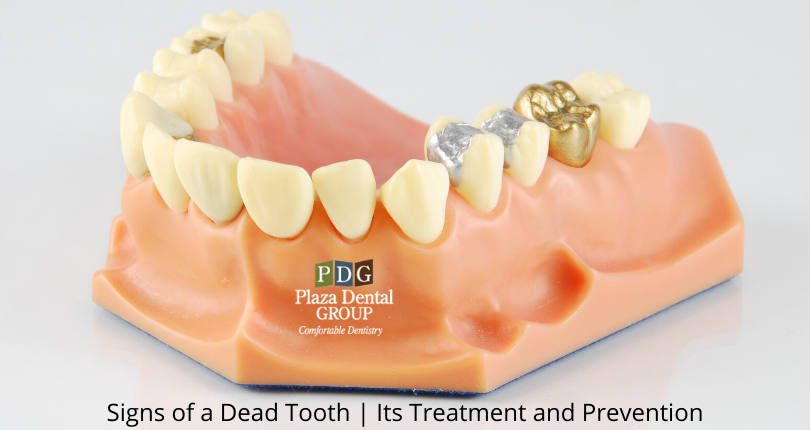
Signs of a Dead Tooth | Its Treatment and Prevention

Signs of a Dead Tooth | Its Treatment and Prevention

Signs of a Dead Tooth | Its Treatment and Prevention


A tooth contains three layers: the pulp, enamel, and dentin. To stay healthy and alive, the pulp of the tooth must have a continuous blood supply. When the nerves in the tooth pulp get damaged due to an injury or decay and no longer receive any blood supply, it creates a dead tooth. If left untreated, the dead tooth may affect the jaw and other teeth.

Read on to learn more about the causes, signs, and treatment of a dead tooth.

What Are the Causes of a Dead Tooth?

The possible causes of a dead tooth are:

  • Physical injury to the tooth – It may cut off the blood supply to the tooth, causing the tooth to die.
  • Poor Dental Hygiene – It can lead to cavities. If left untreated, cavities can cause infection in the tooth pulp, which stops the blood supply to the tooth and causes it to die.

Signs of a Dead Tooth

You can identify a dead tooth by these two primary symptoms:

  • Pain – You may experience pain in and around the tooth if your tooth is dead. An infection or dying nerves causes pain, which can be mild or intense.
  • Discoloration – A dead or dying tooth won’t receive any blood supply, thus causing the color of the tooth to turn yellow, light brown, gray, or black. The discoloration will increase if the dead tooth is left untreated.

People with a dead tooth may experience these symptoms too:

  • Swelling around the gum line
  • Bad taste
  • Bad breath

How Is a Dead Tooth Diagnosed?

It is recommended to visit your dentist as soon as you have a tooth injury or if you notice any kind of pain and discoloration in your tooth so that they can begin the treatment. A dentist may find a dead tooth during dental checkups and through dental X-rays.

Treatment Options for a Dead Tooth

A dead tooth can be treated by any of the following procedures:

  • Root Canal

    During this procedure, the infected tooth and its root will be cleaned to remove the abscess or infected tissue. After cleaning, your dentist will seal the root and place the permanent filling to prevent further infection.

    A dead tooth can function after treatment, but a crown or veneer may be required to provide extra strength and support.

  • Tooth Extraction

    Your dentist may recommend removing your tooth if it cannot be restored or is severely damaged. During the procedure, your dentist will completely remove your tooth. However, you can replace the extracted tooth with a denture, implant, or bridge.

Tips for Preventing a Dead Tooth

Follow these tips to prevent a dead tooth:

  • Practice good oral hygiene that includes brushing and flossing twice a day
  • Wear a mouth guard if you participate in contact sports to prevent injury to your teeth
  • Limit the intake of sugary foods and beverages to decrease your risk for cavities and decay
  • Drink more water, especially after eating, to wash away food particles
  • Schedule regular dental visits for checkups and cleanings

If you are looking for the best treatment for a dead tooth, contact our leading dentists at Plaza Dental Group in Des Moines.

Plaza Dental Group

Plaza Dental Group is a leading group of dentists in Des Moines, IA that provides high-quality dentistry in a comfortable and stress-free environment. We have a team of caring and highly-skilled professionals that uses state-of-the-art technology and delivers excellent service to the patients. Request an appointment today!

things-you-should-consider-after-dental-procedures

Things You Should Consider After Dental Procedures

Things You Should Consider After Dental Procedures


Each dental procedure requires specific care once the process is over. Depending upon the dental procedures, post-procedure care also differs. Here are some common dental procedures and the things you should consider after undergoing them.

  • Teeth Whitening

    A teeth whitening procedure removes an indispensable tooth layer, which takes around 48 hours to redevelop. Therefore, to maximize the results of the procedure, you should avoid consuming drinks and foods that may stain your teeth.

  • Tooth Extraction

    Avoid disturbing the treatment area by swishing, smoking, or using straws after a tooth extraction procedure. Let the area heal and clot. Gauze can be applied to the treatment area with light pressure to control the bleeding. Eat only soft foods for the first few days and drink plenty of water. Chew with the opposite side of your jaw for at least 24 hours to minimize any direct contact with the extraction area. You can use over-the-counter pain relievers if needed. An ice bag can also be applied to the facial area to relieve pain.

  • Root Canal Treatment

    It is essential to take an over-the-counter pain medication within one hour of completing a root canal procedure. This will help you to overcome discomfort once the anesthesia wears off. Chew only with the opposite jaw until a permanent crown or filling is applied where the root canal was performed. Also, avoid chewing gum and other sticky candies that can dislodge your temporary crown or filling.

  • Dental Implant

    Post-procedure care steps of a tooth extraction procedure can be followed in case of dental implants too. Apply a cotton gauze with light pressure to control the bleeding for about 30 minutes after the procedure. Do not brush your teeth for eight hours after an implant. Also, make sure to brush very gently for the next few days.

  • Fixing of Dental Crown and Bridge

    If you had to undergo anesthesia for the procedure, do not eat anything until the anesthesia entirely wears off. If the bite feels uneven after the procedure, schedule an appointment to reduce the discomfort and pain. Floss your permanent crown often as you would floss your natural teeth. In the case of bridges, use a floss to remove food particles beneath them. Avoid hard foods such as candies, nuts, and ice that can damage your dental crown. Also, make sure to use a night guard if you suffer from bruxism.

If you want to know more about various dental procedures, their treatment, and things to consider after a dental procedure, contact our dentists in Des Moines.

Plaza Dental Group

Plaza Dental Group is a leading group of dentists in Des Moines, IA that provides high-quality dentistry in a comfortable and stress-free environment. We have a team of caring and highly-skilled professionals that uses state-of-the-art technology and delivers excellent service to the patients. Request an appointment today!

why-should-young-people-consider-getting-partial-dentures-_2368

Why Should Young People Consider Getting Partial Dentures?

Why Should Young People Consider Getting Partial Dentures?


When you think of dentures, older people come to mind. Today, even 30 year old patients can get dentures due to various reasons and benefit from them. However, with timely visits to your dentist, you can prevent the need for dentures.  

When should you consider dentures?

  • Toothache – When you have a throbbing toothache and no medications are helping, you need to consult your dentist right away. Toothache is a sign of tooth decay which would require a root canal. But sometimes tooth decay is beyond repair, therefore dentures come into play.
  • Difficulty in chewing – If you are unable to chew hard or chewy food, consider getting dentures in Des Moines.  Sometimes it becomes difficult to chew food and you end up taking larger bites which can lead to stomach pain and cause chronic indigestion. Consult your dentist when such problems arise.   
  • Swollen gums – You may need to consider dentures if your gums are swollen and red. Early signs of gum disease or gingivitis can be treated on time with a thorough cleaning, and dentist prescribed toothpaste and mouthwash. Leaving your gum disease untreated, can cause bone loss, and eventually lead to tooth loss. This is when you require dentures. 
  •  Loose Teeth – Generally loose or noticeably shifting teeth indicate decay and may be a result of periodontal disease. There may be significant damage occurring below gums without you noticing it. The same applies to gaps growing wider between your teeth.

Dentures for all ages

Advanced technology has changed the way people look at dentures. They are no longer an uncomfortable, bulky dental application with a fake set of teeth. There are multiple choices available to match your needs. Apart from improving your smile, dentures also help you perform basic functions like chew and bite which would be difficult with missing teeth. Missing teeth can negatively impact your jaw and gums which dentures can help to prevent.

  • Traditional dentures – Removable dentures are made to stick to your gums using special dental glue. Traditional dentures require brushing and flossing twice a day. These traditional dentures can be removed overnight and have to be kept soaked in water or cleaning solution. You also need to be very careful while eating, as you might damage them.
  • Implant-supported dentures – Implants hold the dentures in place, they don’t require a dental glue to stick to the gums. Young patients are known to opt for these modern implants over the traditional ones. To make sure if implant-supported dentures are good for you, the dentist will examine the strength of your gums and jawbone, for they need to be strong enough to hold dental implants. 
  • Partial dentures – If you have substantial tooth decay, consider partial dentures. These dentures replace only a portion of your teeth and take support from healthy teeth around the dentures. They prevent the nearby teeth from moving or shifting. 
  • Full dentures – Your gums have to completely heal to support full dentures. Modern dentures have integrated support and don’t require adhesives to stick to your gums. They are recommended for those who have lost all their teeth. 

Bring back your lost confidence with dentures. There are many options available out there that fit your budget and needs. When you need to get dentures, get in touch with our experienced dentist in Urbandale, and we will be more than happy to help. 


Plaza Dental Group

Plaza Dental Group is a leading group of dentists in Des Moines, IA that provides high-quality dentistry in a comfortable and stress-free environment. We have a team of caring and highly-skilled professionals that uses state-of-the-art technology and delivers excellent service to the patients. Request an appointment today!

Deep Bite Correction: Things You Should Know

Deep Bite Correction: Things You Should Know

Deep Bite Correction: Things You Should Know


A deep bite, a common malocclusion seen in children and adults, is tough to treat. A successful bite correction treatment usually takes around 1.5 to 2 years. However, the treatment time for deep bite correction varies depending upon the type, severity, and nature of the deep bite. Today advanced orthodontics has made the correction treatment less challenging.

Read on to learn everything about the deep bite problem and its treatment.

What is a deep bite?

Closed bite or deep bite is the result of your lower front teeth biting into the gum tissue at the back of your upper front teeth. This can lead to unnecessary wear and tear of the upper and lower teeth, significant pain, and even periodontal damage.

What causes a deep bite?

A deep bite problem can occur due to the following factors:

  1. Misalignment of teeth and jaws
  2. Smaller lower jaw
  3. Genetic factors
  4. Worn or decayed teeth
  5. Teeth crowding
  6. Failing dental work
  7. Missing back teeth

Why do deep bites need to be fixed?

Fixing a deep bite can significantly improve your smile. Other reasons to fix your deep bite include:

  • Patients who clench their lower teeth against their upper teeth experience excessive wear that can cause damage to the tooth structure.
  • Painful ulcers and sores tend to develop in patients who bite into the roof of their mouth, making eating very unpleasant.
  • If a considerable part of the tooth structure has been damaged, the orthodontist can open the bite by recreating the space required for restoration by moving the lower and upper teeth apart.
  • Deep bites are usually accompanied by crowding and crookedness of teeth. If you want to align your teeth, deep bites need to be corrected.

How do orthodontists correct a deep bite?

An orthodontist often corrects deep bites using several methods, including:

  1. Moving up either the lower or upper front teeth or both into their supportive bones.
  2. Elongating the back and side teeth to open the bite. This has the same effect as intruding on the front teeth.
  3. Make room for the correction of the front teeth by moving the molar teeth backward.

Our Des Moines dentist will help you to determine what deep bite treatment is best for you. Contact us to book an appointment today!

Plaza Dental Group

Plaza Dental Group is a leading group of dentists in Des Moines, IA that provides high-quality dentistry in a comfortable and stress-free environment. We have a team of caring and highly-skilled professionals that uses state-of-the-art technology and delivers excellent service to the patients. Request an appointment today!

SCHEDULE YOUR CONSULTATION TODAY

Experience the Plaza Dental Group difference. Call our office today to schedule a consultation.
First class service, just ask our patients...
4.6
Based on 524 reviews
I had my first appointment for dental implants today and met the entire team. I was thoroughly impressed with their positivity and professionalism. They were very empathetic and caring. I trust absolutely that this will be a great experience. Thank you!
D Yates
D Yates
I cannot say enough amazing things about Plaza Dental, Dr. Dietrich and her amazing team- Carlee, Carley, Bekka, Lacey, and Jayde! ♥️I walked in feeling embarrassed, emotional, discouraged, and honestly terrified because of past experiences with dentist offices.At Plaza Dental they truly cared about ME and not just my teeth. At every appointment they cheered me on, hyped me up, and made me feel comfortable and confident again. They celebrated every little step with me, and because of them, I now have a brand new smile and feel like I have my life back.There really are not enough words to thank these women for what they have done for me. Their kindness, compassion, encouragement, and support changed so much more than just my smile. I will forever be grateful.read more
Samantha Darrah
Samantha Darrah
Talia has been my hygienist for over 10 years and continues to provide me exceptional care and education around my dental health. I would recommend Plaza Dental Group to anyone looking for a new dentistry in the Des Moines area.
Austin Rader
Austin Rader
I’m 66 years old and still had anxiety about dentist visits. After today I will be happy to go to the dentist. Only wish I found this office sooner.
Jennifer Anderson
Jennifer Anderson
Had an unexpected tooth ache which escalated over night. Called the minute they opened and They graciously got me Rignt in!From start to finish the team went above and beyond. Thank you for putting me at ease and taking such remarkable care!Would not go anywhere else highly recommend!!!
Jo Jordan
Jo Jordan
Lacey was the best dental hygienist I’ve ever had. She was very thorough, assuring, and knowledgeable. Couldn’t have asked for a better experience at the dentist!!!!
Logan Saccoman
Logan Saccoman
My daughter has been my dental hygienist for the past 20 years and has decided to stay at home with her kiddos, therefore I needed to try a new hygienist. I was pretty apprehensive and thought I’ll make the 2 hour drive , have one last appointment then find someone in my. Lacy was my hygienist . She was amazing!!! She was knowledgeable, gentle, informative and thorough. The best part was that I felt like I was sitting there with my daughter. Lacy exceeded my expectations. I’ll definitely be making the two hour drive. Lacy, you’re my new hygienist and I couldn’t be more pleased.I am not one to leave reviews, but I felt my experience was note worthy.read more
Candy Elsbury
Candy Elsbury
Dr Odland is the best dentist in iowa. Susie has really helped me with my dental issues. She is great and caring. Dr Langel is doing a great job just like dr odland.
Darlene Raedeker
Darlene Raedeker
That Lacey has the hands of an angel. Manages to do an entire cleaning without spraying me in the face or getting toothpaste everywhere, bless her heart. The tall guy was ok.Boy that front desk was just the best, can’t remember her name for the life of me. Jane? Jayde? Erin? 10/10 team there.
Jayde Witte
Jayde Witte
Friendly yet professional!! VERY PLEASED with the result. Appreciate all the learning happening during the visit! Explanation for everything!! So happy I’m with Plaza Dental!!
Randi Black
Randi Black
Great experience here, they did an xray to check what’s wrong and figured it out right away. They were very understanding and explained everything clearly and I had no anxiety here at all.
Chloe Winfred
Chloe Winfred

Contact Us

14111 Douglas Pkwy Suite 103 Urbandale IA 50323

Opening Hours

  • Mon - Wed 8:00 am - 4:00 pm

  • Thursday 8:00 am - 3:00 pm
  • Friday 8:00 am - 12:00 pm
  • Sat - Sun Closed

© 2024 All Rights Reserved | Dentist Websites by Connect My Marketing

Skip to content